JunPus

JunPus thermal compounds deliver advanced heat dissipation solutions tailored for high-performance AI chips, CPUs, GPUs, and 5G base stations.

Engineered for cutting-edge semiconductor technologies,

our patented thermal pastes optimize thermal conductivity, ensuring stable performance under intensive workloads. Trusted across electronics, data centers, and telecommunications

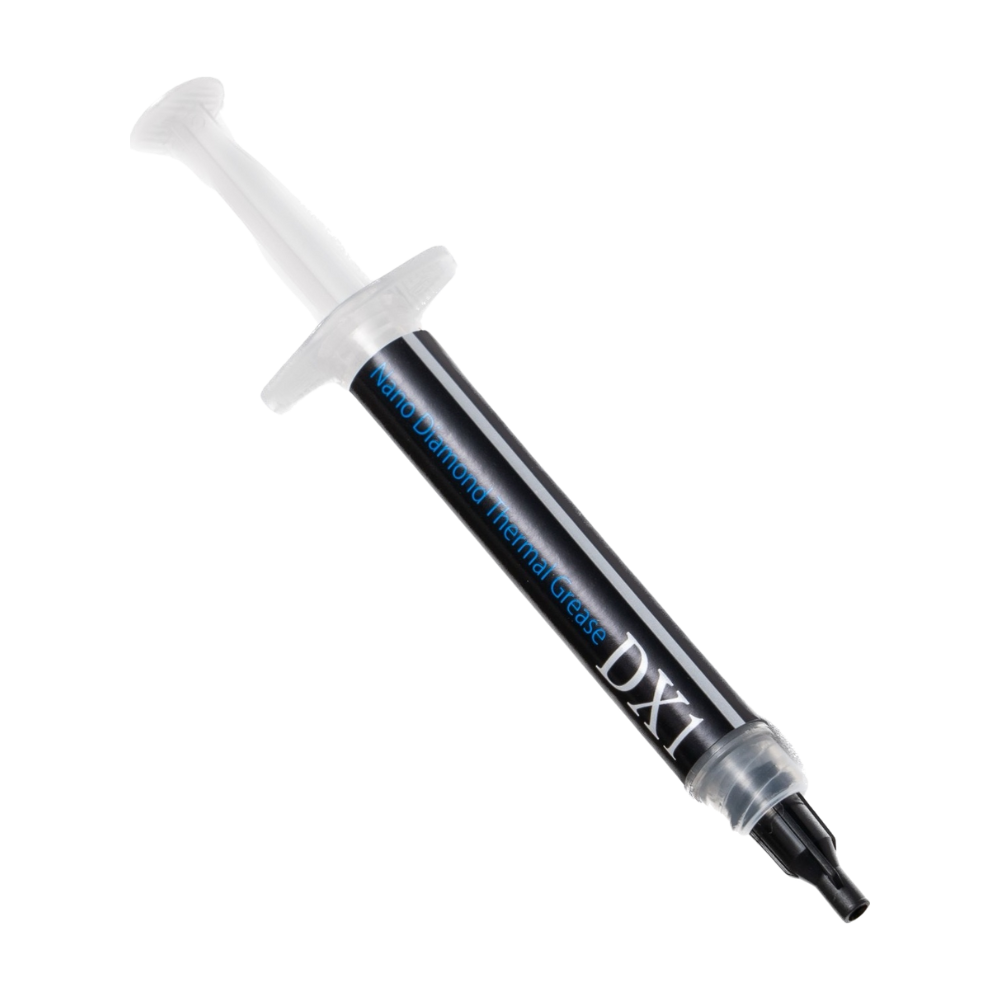
JP-DX1

Nano-diamond
thermal paste.

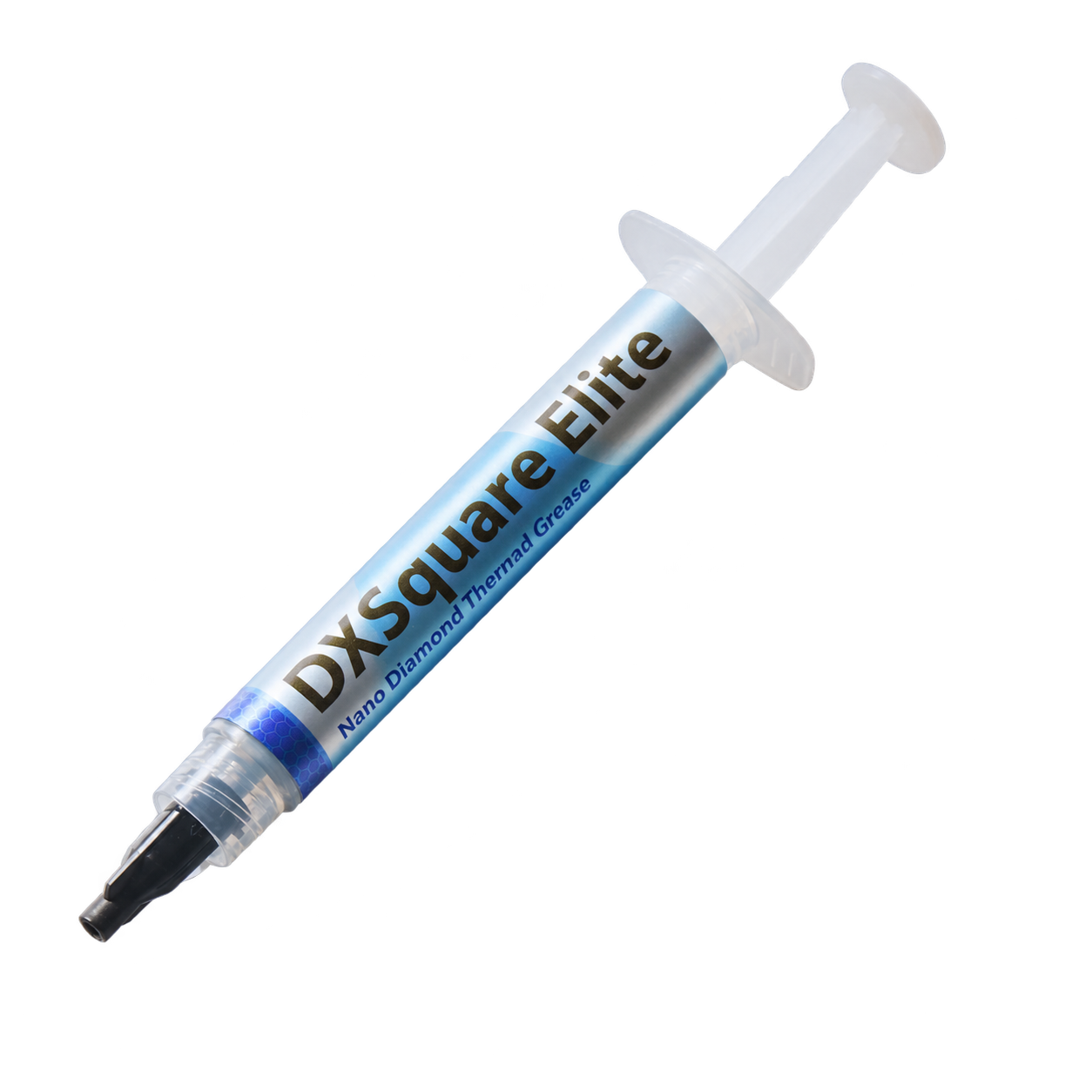
JunPus JP-DX1 original syringe photograph

Specifications.
Conditions included.

Published product information.
Confirm the current approved documentation.

Thermal impedance
0.05 °C·cm²/W @ 60 psi
Thermal conductivity
16 MAX W/(m·K)
Density (g/cm³)
2.7
Viscosity
3,000,000 mPa·s
Color
Gray
Model
JP-DX1

Thermal conductivity: 16 MAX W/(m·K), as listed in the 2024 catalogue. Confirm the current approved specification and test conditions with JunPus.

The 60 psi specification is a laboratory reference condition, not an instruction to apply that pressure to a processor.

Reading the values in context

Thermal conductivity, area-normalized thermal resistance and system temperature are different measures. These figures do not directly predict a CPU temperature reduction. Confirm suitability in the actual assembly and operating conditions.

View the official specifications

Particle-packing
concepts.

Thermal paste fills small surface gaps between the processor and cooler. Contact pressure and bond-line thickness influence interface performance. Particle shape and packing vary by formulation.

JunPus Mixed-Particle-Size Fillers

Other Brands’ Thermal Paste: Platelet Filler Example

Conceptual cross sections showing mixed-size rounded particles and illustrative platelet-shaped filler.
Conceptual illustration from the current official page, not a measured comparison.

Pressure points.
Reliability over time.

Historical reference data.
Not a specification for the current formulation.

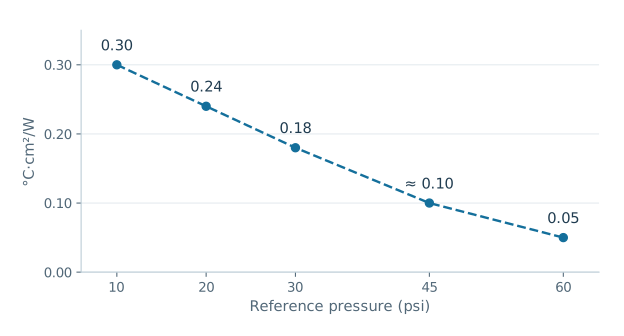
Pressure-reference points

Thermal impedance, °C·cm²/W.

45 psi is approximate. Dashed segments connect reference points; they are not a raw measurement curve.

Thermal impedance reference points: 10 psi 0.30, 20 psi 0.24, 30 psi 0.18, 45 psi approximately 0.10, 60 psi 0.05 degrees Celsius square centimeters per watt.

Exposure test reference data

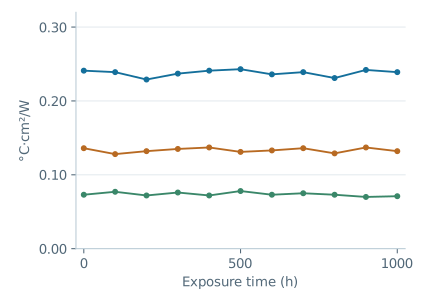
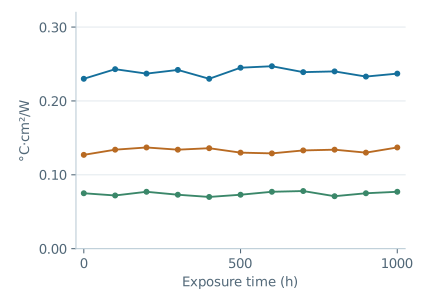
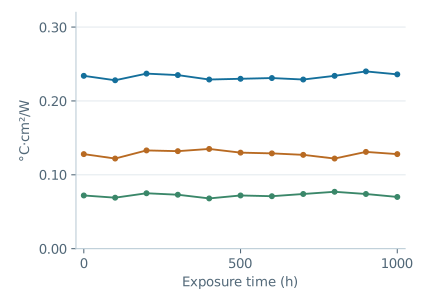
Historical 2012 report data, 0 to 1000 hours. Fixed measurement pressure for each series: 20, 40 and 60 psi.

  • 20 psi
  • 40 psi
  • 60 psi

85°C / 85% RH exposure

Thermal impedance during combined temperature and humidity exposure.

Thermal impedance during 85 degrees Celsius and 85 percent relative humidity exposure, at 20, 40 and 60 psi from 0 to 1000 hours.

125°C aging

Thermal impedance during high-temperature aging exposure.

Thermal impedance during 125 degrees Celsius aging, at 20, 40 and 60 psi from 0 to 1000 hours.

−40°C to 125°C thermal cycling

Thermal impedance during the stated thermal-cycling exposure.

Thermal impedance during minus 40 to 125 degrees Celsius thermal cycling, at 20, 40 and 60 psi from 0 to 1000 hours.

Measurement conditions: 20, 40 and 60 psi; 100 W; 60 minutes per measurement; 23 ± 3°C and 55 ± 3% RH; 10 specimens. Reference data, not a specification for the current formulation. These historical report values are not independently verified raw measurements and do not establish installed service life.

X-pattern
application.

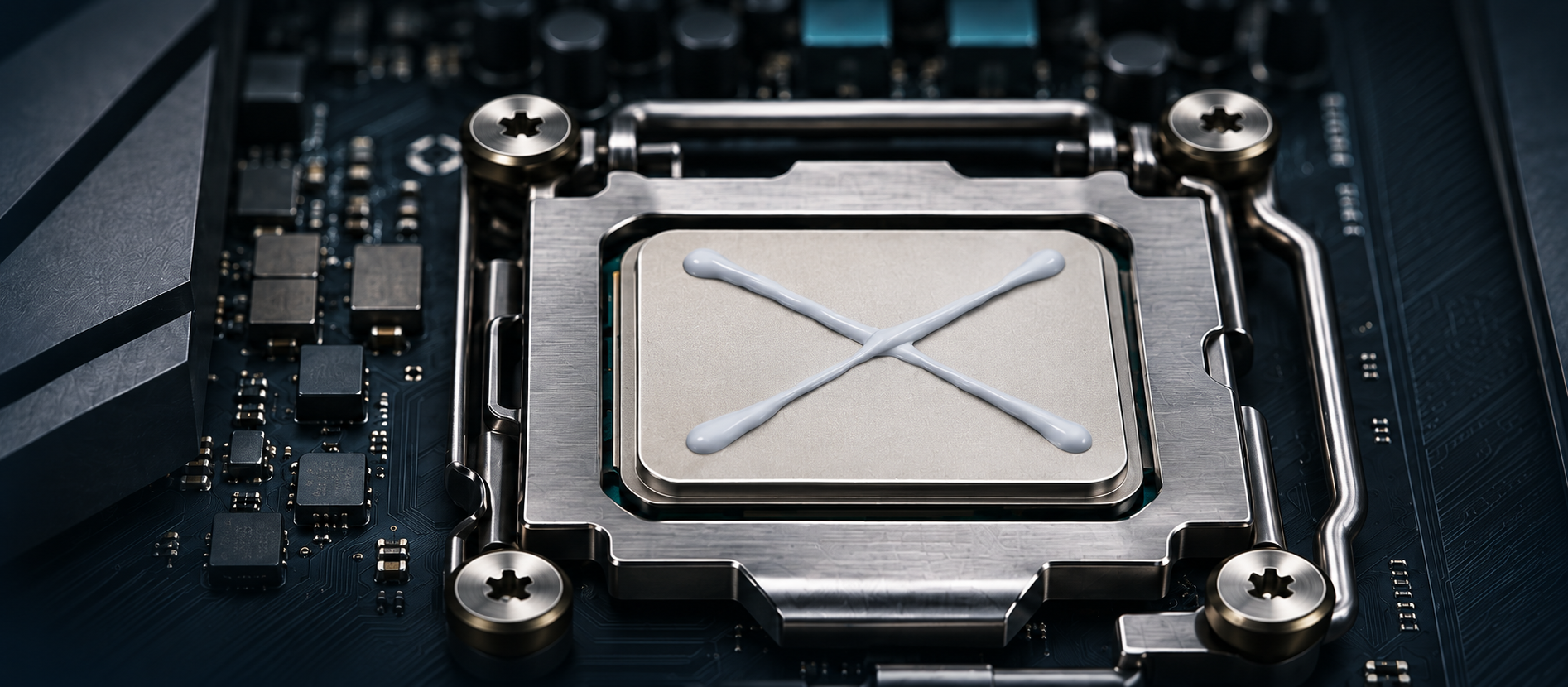
For CPU and GPU interfaces where thermal grease is specified. The X pattern illustrates the application concept. Follow the device manufacturer’s application and mounting instructions.

Nano-diamond molecular structure icon
Nano-diamond formula
Crossed-out electrical bolt icon
Electrically non-conductive
Layered non-curing grease icon
Non-curing grease
Illustration of an X-shaped JP-DX1 application pattern.

Cross-pattern application

Apply JP-DX1 in an X-shaped pattern on the prepared contact surface.

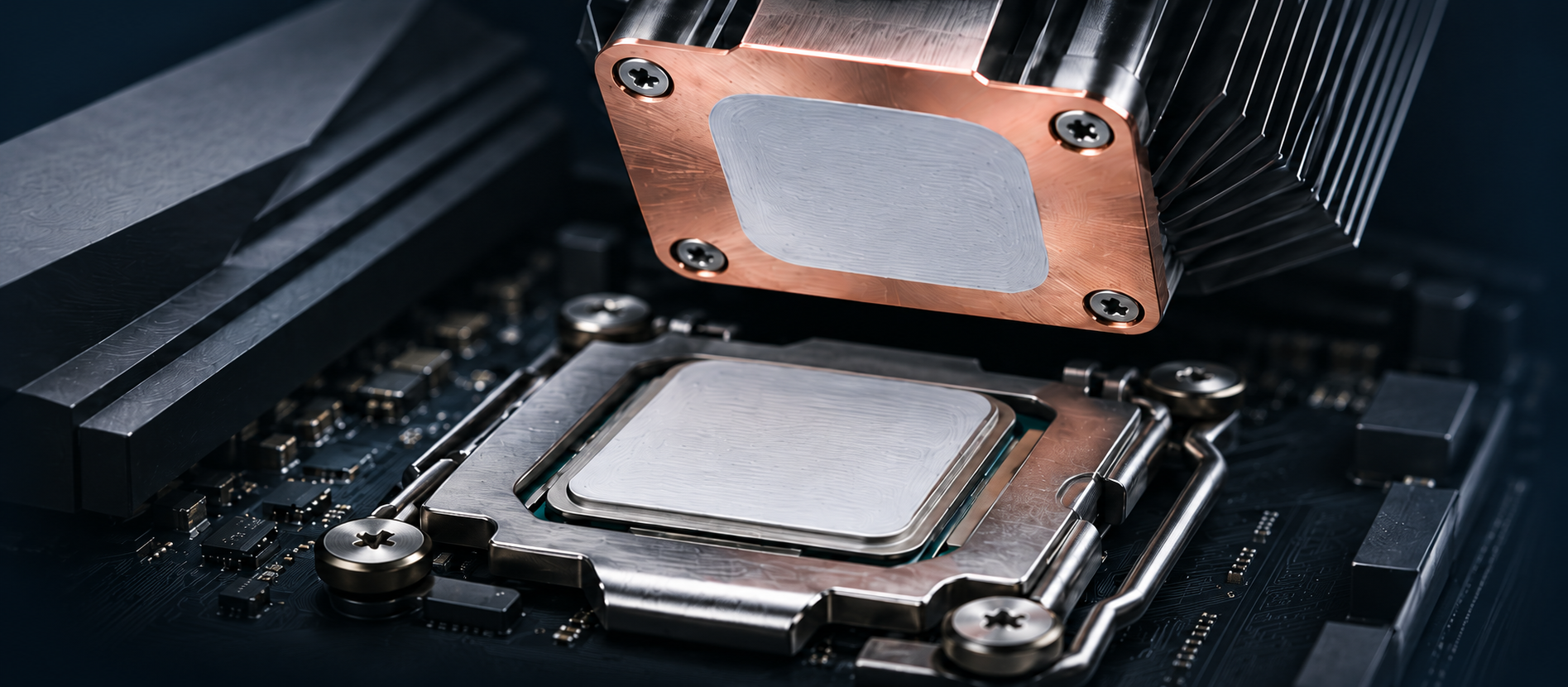
Illustration of the JP-DX1 contact layer under mounting pressure.

Spread under mounting pressure

Install the cooler evenly to help spread the paste across the interface.

  1. Prepare the surfaces. Follow the hardware maker’s cleaning guidance.
  2. Match the method to the hardware. Confirm the amount and application pattern for the specific cooler and processor.
  3. Mount as instructed. Use the hardware maker’s procedure and pressure requirements.

The 60 psi specification is a laboratory reference condition, not an instruction to apply that pressure to a processor.

See the complete
thermal path.

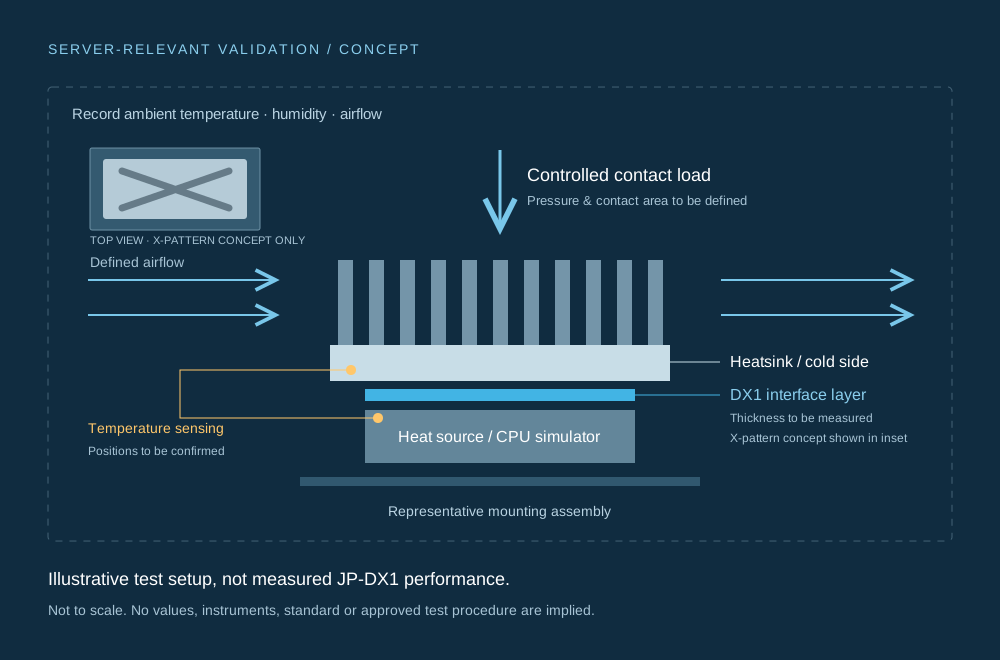
CPU → DX1 interface → heatsink. Control the mounting, sensors, load and environment before evaluating the result.

Validate suitability in your actual hardware and operating conditions.

Watch the official DX1 video ↑
Illustrative test setup with contact load, heatsink, DX1 interface, heat source, sensing and ambient controls. Not measured JP-DX1 performance.
Illustrative setup, not measured JP-DX1 performance.

Documents for DX1.

Contact JunPus to confirm availability, language and revision of the approved documents for your model and application.

View JP-DX1 in DownloadsOfficial document informationRequest documents for JP-DX1
Durability, pump-out & service life

Test duration, storage life and installed service life are different. To assess pump-out or material movement, define the assembly, bond line, pressure, thermal cycles and inspection method. No permanent-performance, no-loss or fixed-year guarantee is established here.

Start with
your application.

Tell JunPus about your assembly and operating conditions.

Product inquiry

NANO DIAMOND THERMAL GREASE DX1

  • Thermal Resistance (℃·cm²/W)
    0.05 @ 60 Psi
  • Thermal Conductivity (W/m·K)
    16 MAX
  • Specific Gravity (g/cm³)
    2.7
  • Viscosity (mPa·s)
    3,000,000
  • Color
    Gray
  • Model
    JP-DX1

JP-DX1 is a nano-diamond thermal grease for CPU and GPU thermal interfaces. Its silicone-based, electrically non-conductive and non-curing formulation is designed for the contact layer between a processor and its cooling assembly.

JunPus

Performance Starts with Superior Thermal Connectivity.For OEM/ODM products please go to JunPus International Co., Ltd.

Our Company
Customer Services
Contact Info

Do you need assistance?

For any questions or concerns, you can reach us via our contact form