JunPus

JunPus thermal compounds deliver advanced heat dissipation solutions tailored for high-performance AI chips, CPUs, GPUs, and 5G base stations.

Engineered for cutting-edge semiconductor technologies,

our patented thermal pastes optimize thermal conductivity, ensuring stable performance under intensive workloads. Trusted across electronics, data centers, and telecommunications

JP-DXSquareElite

Cooling for Elite Performance

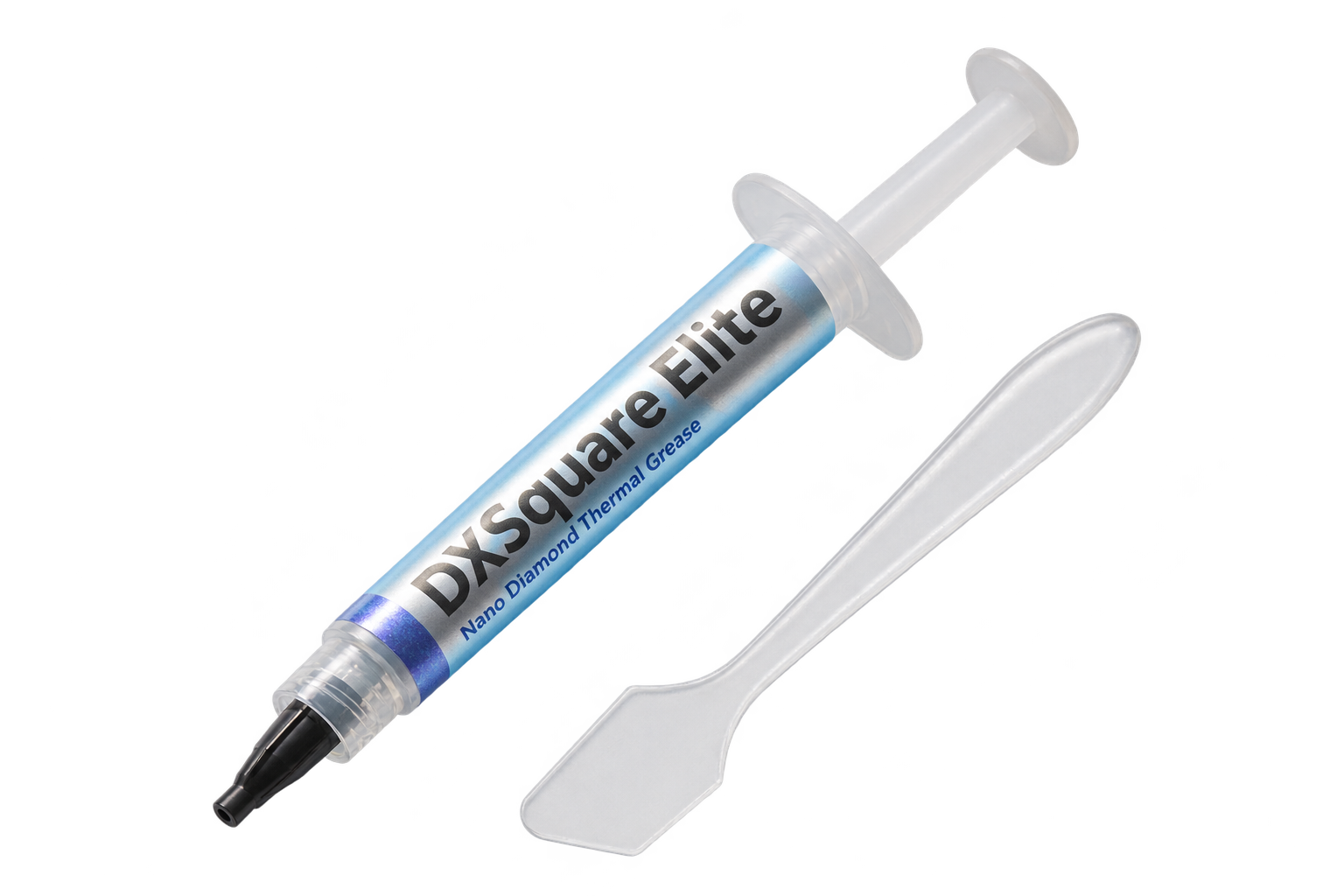
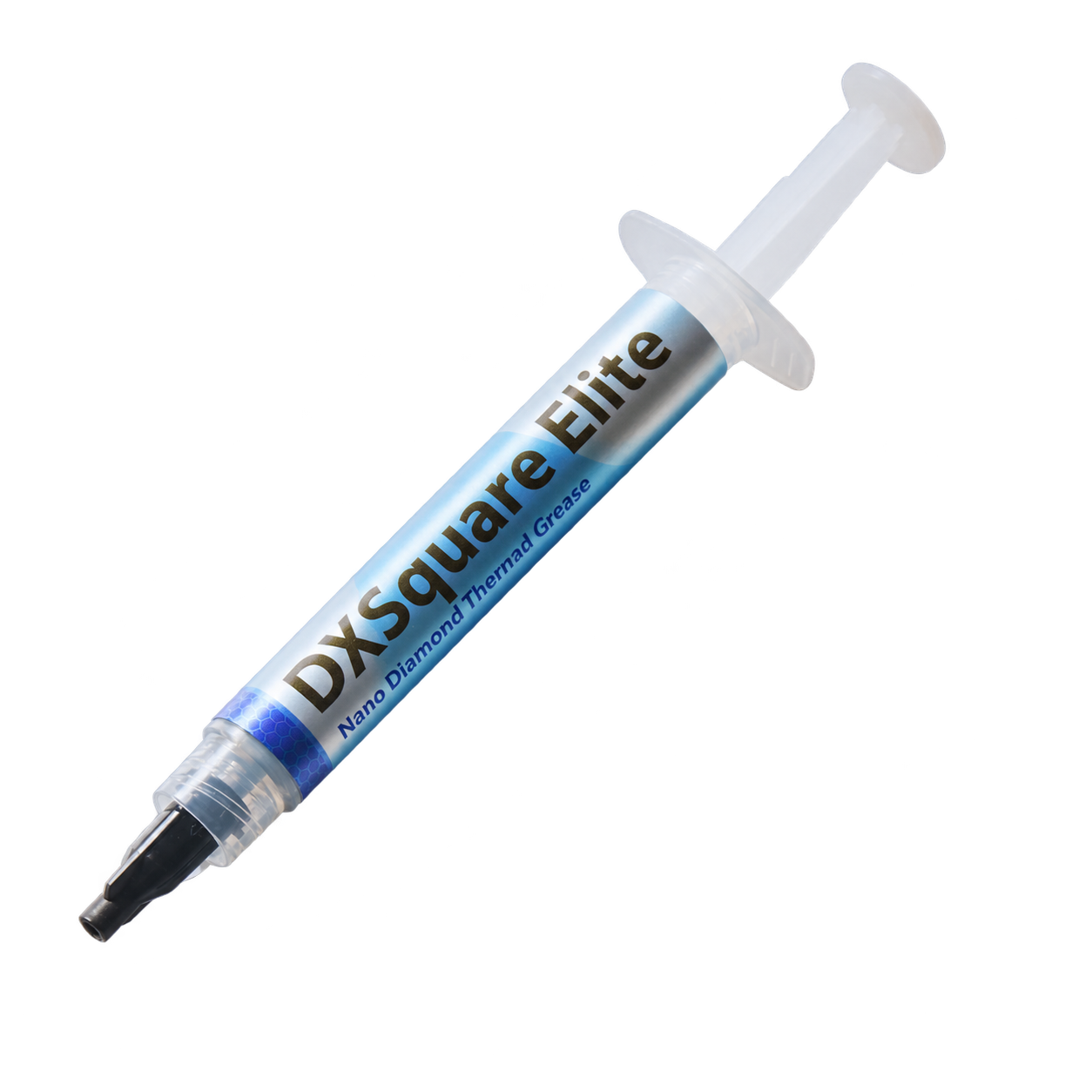
JunPus JP-DXSquare Elite thermal paste syringe

JP-DXSquare Elite

Precision
takes shape.

A refined interface for CPU and GPU cooling.

JP-DXSquare Elite is a square nano-diamond thermal grease for the contact layer between a CPU or GPU and its cooler.

Discover JP-DXSquare Elite
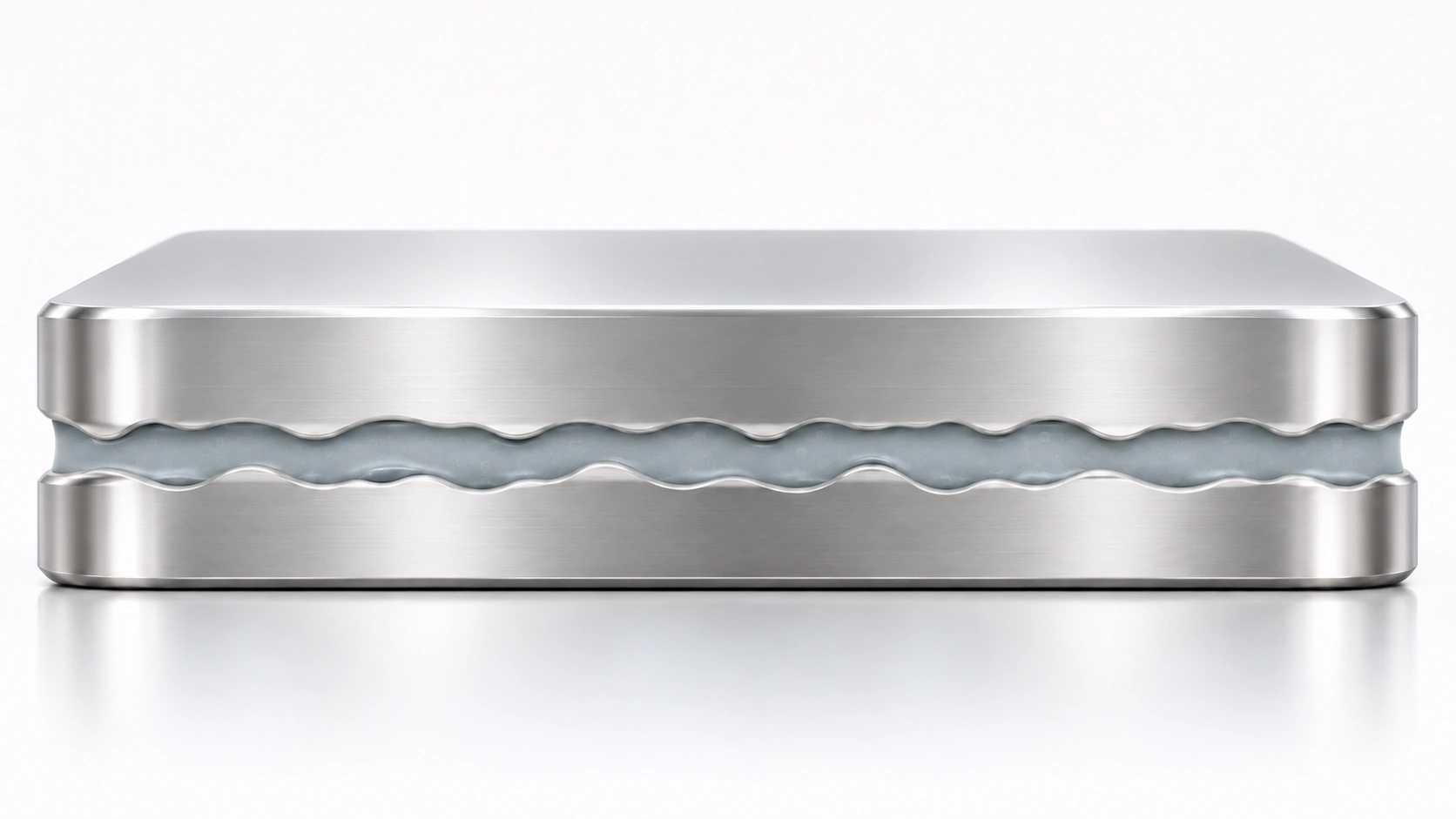
Conceptual cross-section of fine square nano-diamond filler within soft thermal paste conforming to two irregular microscopic metal contact surfaces.
Two contact surfaces. One thermal interface.

The paste conforms to surface irregularities to help reduce interfacial air gaps. Fine square filler outlines are shown schematically within the paste. Surface roughness, particle size, spacing and layer thickness are exaggerated for explanation; this is not microscopy or a measured void-fraction result.

Thermal grease for
demanding electronics.

Elite forms the thermal interface between a heat-generating component and its cooler. The compound fills surface irregularities at the contact joint, supporting heat transfer into a heatsink or cold plate.

Its gray, square nano-diamond formulation combines filler design with surface-modification technology and metal-surface wettability.

JunPus identifies high-performance CPU and GPU cooling, gaming PCs, workstations, servers and high-performance computing systems among its intended applications.

Formulated for
surface contact.

Elite’s square nano-diamond formulation brings together surface-modified filler and a carrier system formulated without small-molecule solvents. These material characteristics guide application and process evaluation.

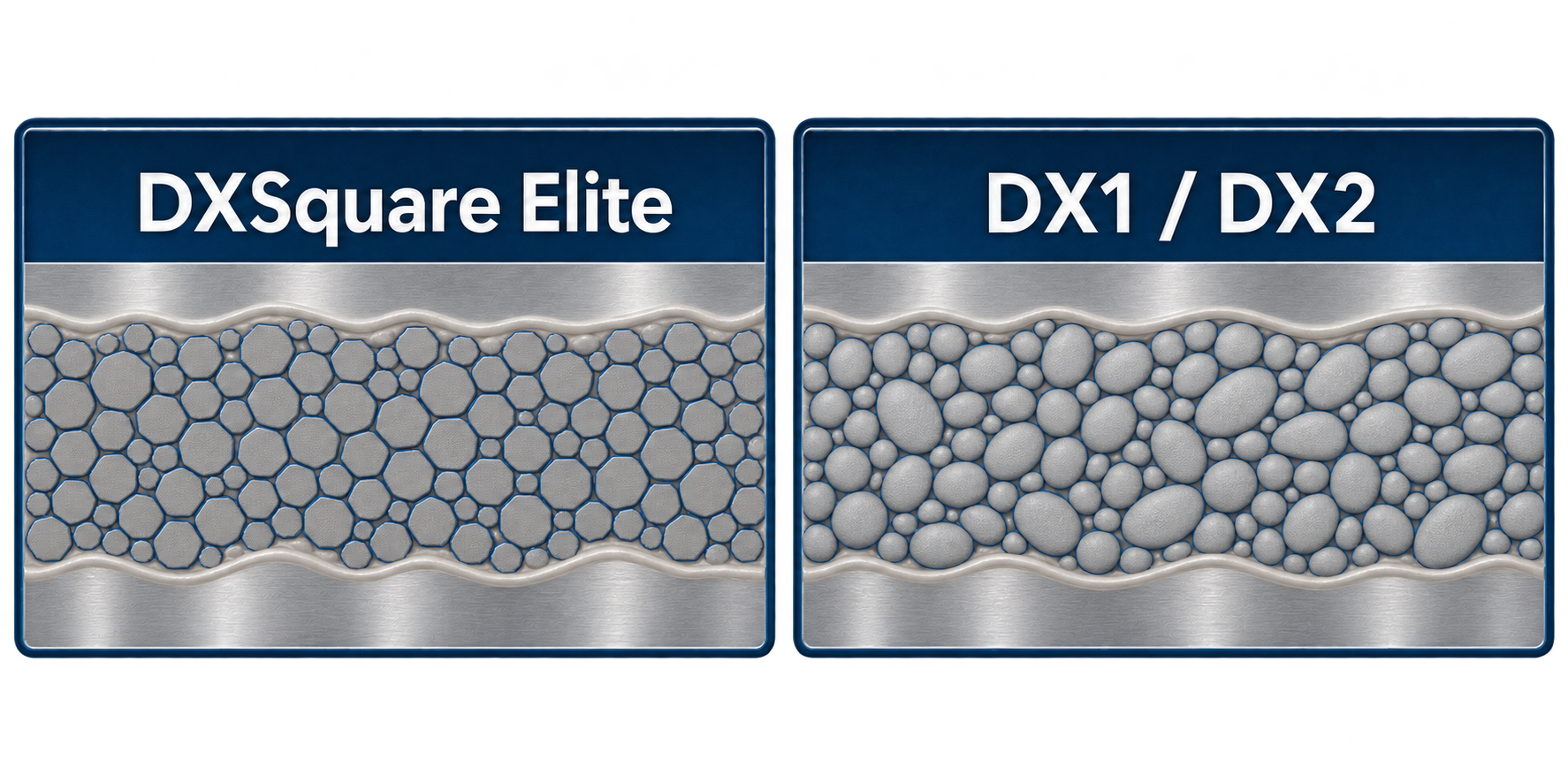
Schematic comparison of dense hexagonal and rounded filler layouts between metal contact surfaces.
DXSquare Elite“Gap Filling Efficiency By 25%”
DX1 / DX2“Smaller Diamonds fill space”

Quoted from JunPus 2024 product materials. The 25% figure is a historical manufacturer claim; the cited materials do not provide its test method or conditions. It is not a measured result from this illustration.

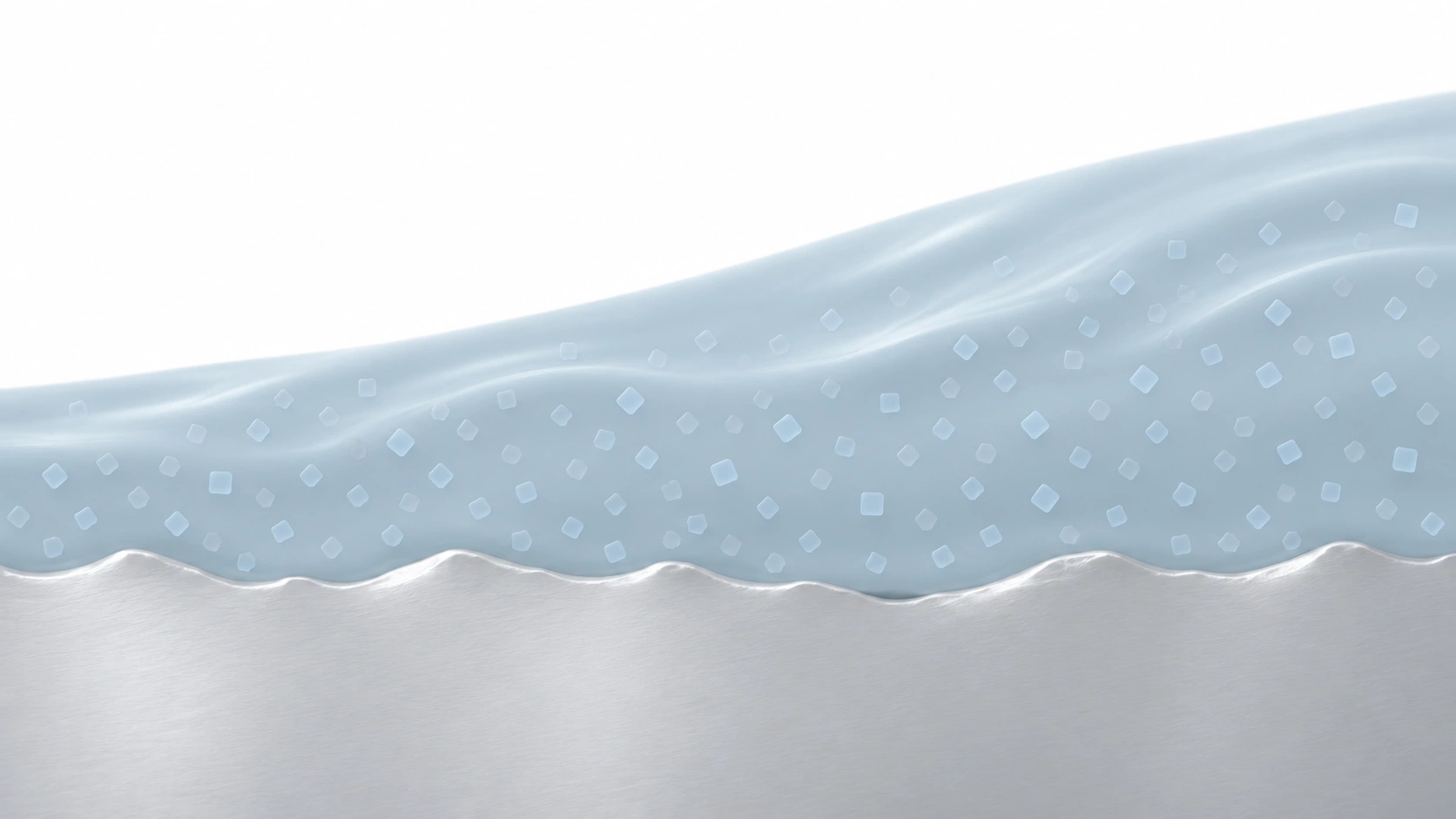
Magnified concept of small softened square filler outlines embedded in smooth thermal paste along an irregular metal contact surface.
Magnified material concept. Square filler outlines, spacing, surface roughness and proportions are illustrative, not microscopy or a measured particle-size distribution.

Square nano-diamond formulation

The technical data describes morphology refinement and micro-alloy doping as the filler-surface modification methods.

Metal-surface wetting

The formulation is designed to wet metal contact surfaces, helping establish the interface between a component and its cooler.

Controlled application

Screen printing is a documented application option. Evaluate coverage and process settings for the intended contact area.

At the heart
of the cooling path.

The thermal compound works at the solid contact joint between the processor and cooler. Evaluate Elite for your heat source, cooler design and assembly process.

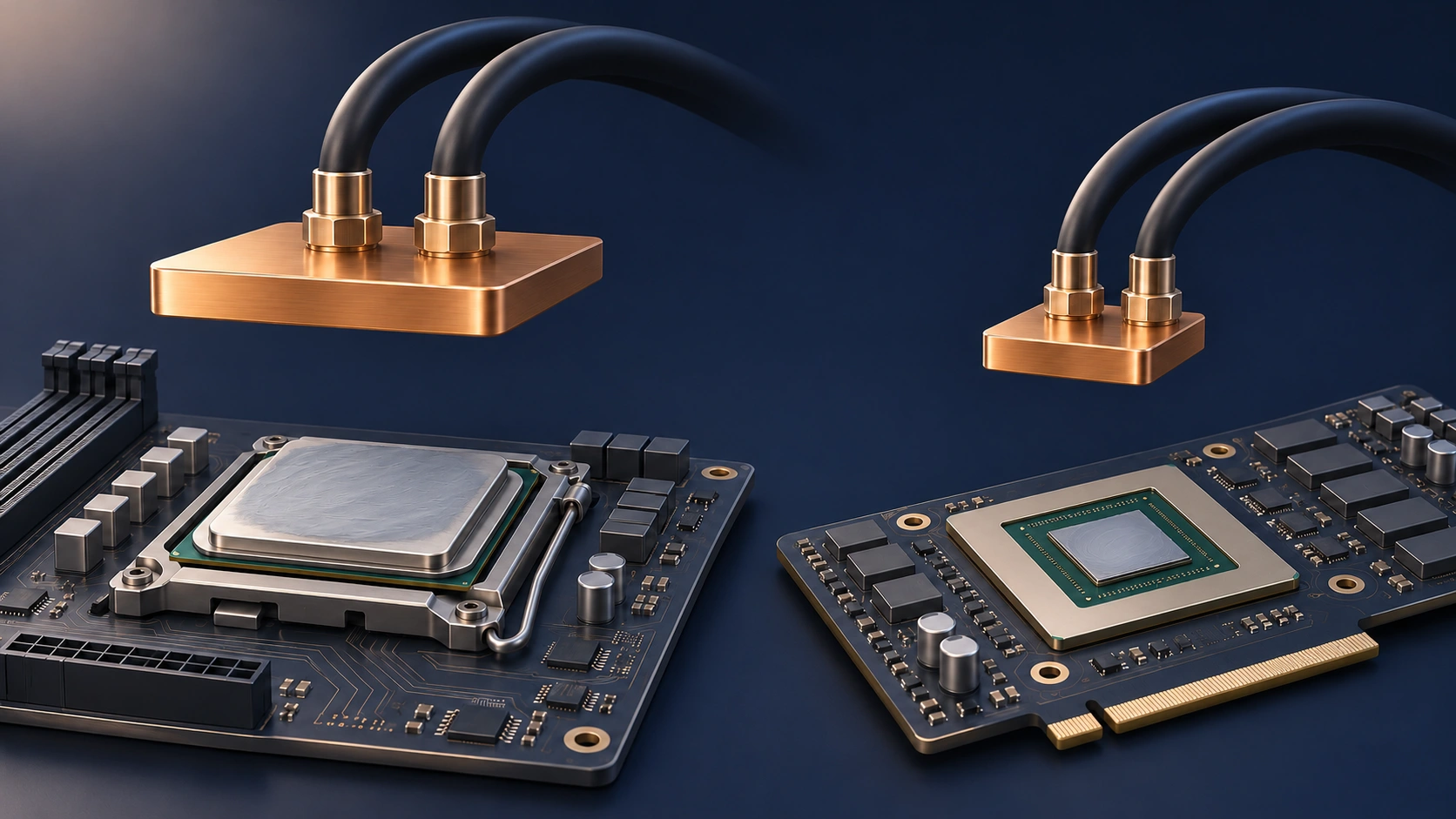
Conceptual CPU and GPU liquid-cooling assemblies with thin thermal-paste interfaces at the CPU heat spreader and bare GPU die.
Application concept: cold plates are lifted to reveal thin, spread paste layers on a CPU heat spreader (left) and a bare GPU die (right). Layer thickness and hardware details are illustrative. Confirm compatibility with the actual hardware.
CPU cooling

Between the heat spreader and cooler.

Evaluate Elite for the grease interface between a CPU’s integrated heat spreader and the contacting base of a heatsink or cold plate. Gaming PCs, workstations and server systems are among its intended applications.

GPU cooling

At the processor-to-cooler interface.

High-performance GPUs are also an intended application. The illustration shows paste at a bare GPU die-to-cold-plate interface. Follow the board maker’s requirements for the actual package and retain specified thermal pads on surrounding components.

Liquid cooling

Into the cold plate.

In a liquid-cooled assembly, the thermal paste transfers heat across the processor-to-cold-plate interface. The cooling loop carries that heat onward from the cold plate.

Application examples describe intended use. Confirm suitability for the exact hardware and assembly process.

Start with
your assembly.

Select the compound based on the component, cooler and application process, then evaluate it under representative operating conditions.

  1. Define the contact surfaces.

    Identify the component surface, cooler material, contact area and hardware mounting requirements.

  2. Plan the application process.

    Establish the application method, paste quantity, coverage and assembled bond line.

  3. Set the operating context.

    Consider the expected workload, thermal cycling and service requirements when planning evaluation.

  4. Confirm the product supply.

    Check the current specification, required pack format and storage instructions with JunPus.

Viscosity at 22°C3,900,000 mPa·s

A reference for evaluating application equipment and process settings. Screen-printing parameters and paste coverage should be established for your assembly.

Prepare, apply and verify.

Follow the hardware manufacturer’s cleaning and mounting instructions. Verify paste coverage and cooler contact, then check thermal behavior under a representative workload.

Published storage condition: 20 ± 5°C. Follow the supplied product label and current handling instructions. Laboratory test pressures are not processor-mounting instructions.

For formulation or viscosity requirements, share the target range, measurement temperature and method with JunPus. Ask which existing products and technical data are available for evaluation.

Three formulations.
One clear starting point.

Compare manufacturer-listed material properties and application guidance, then validate the selected compound in your assembly.

Scroll to compare all three models.

Model JP-DX1 JP-DX2 JP-DXSquare Elite
Color Gray Gray Gray
Density 2.7 g/cm³ 2.9 g/cm³ 2.58 g/cm³
Formulation description Nano-diamond and silicone-based compound Nano-diamond and silicone-based compound Square nano-diamond formulation
Application information Printing and coating described in the family catalog Screen printing and dispensing described in the reliability report Metal-surface wettability and screen-printing suitability described in technical data

JP-DX1

A nano-diamond and silicone-based compound. Start here when reviewing the family catalog’s printing and coating applications, then confirm the product and process requirements with JunPus.

Explore JP-DX1

JP-DX2

A nano-diamond and silicone-based compound with screen-printing and dispensing applications described in its technical documentation. Consider it when evaluating those application processes.

Explore JP-DX2

JP-DXSquare Elite

A square nano-diamond formulation with documented metal-surface wettability and screen-printing suitability. Evaluate it for CPU and GPU interfaces that need close attention to surface contact and assembly conditions.

Review Elite selection guidance

These starting points are not exclusive uses or performance tiers. Confirm the current specification, application process and assembly results before selection.

Selection guidance, with the test context intact.

These are manufacturer-listed properties, not a controlled head-to-head benchmark. A thermal-performance comparison requires matched pressure, temperature, bond line and test method. Density alone does not rank cooling performance.

Shape changes
the geometry.

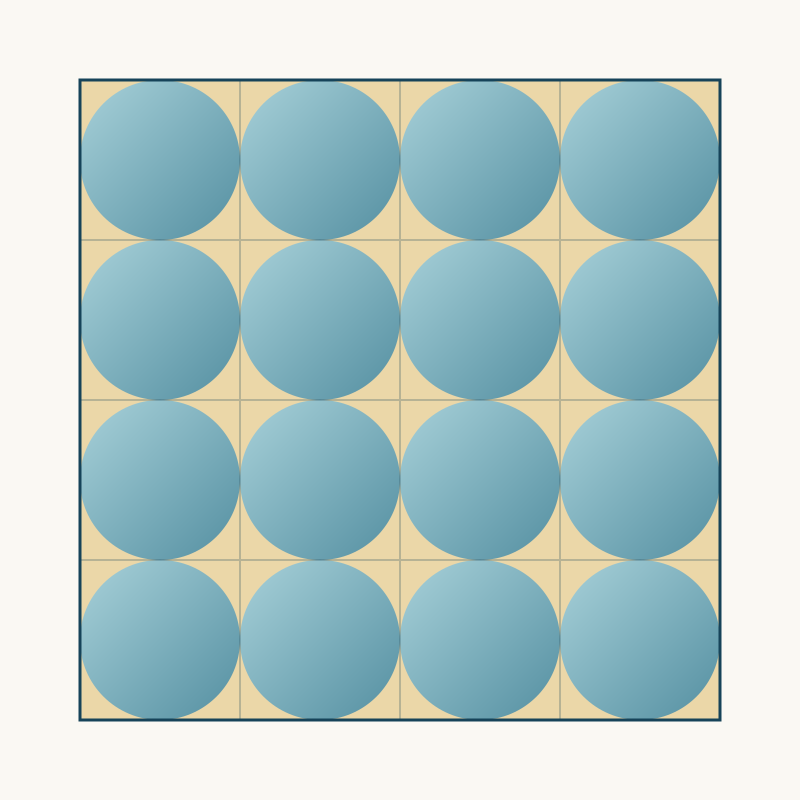
Equal-width round and square profiles leave different gaps on the same square grid. This simple model explains a geometric idea. It does not measure the packing or cooling performance of any JunPus formulation.

Sixteen equal circles touching on a square grid, with gold-colored uncovered spaces between them.

Round profiles

78.5% planar area coverage

21.5% of the cell area remains uncovered.

Sixteen ideal square profiles tiling the same square grid, with boundaries shown and no uncovered area in this ideal model.

Ideal square profiles

100% planar area coverage

No uncovered area in this ideal tiling.

21.5 percentage points of geometric difference.

This is a difference in calculated two-dimensional area coverage, not an improvement in thermal conductivity, CPU temperature or actual filler packing. Real powders contain three-dimensional particles, a binder and a size distribution.

Model assumptions and calculation

Both panels use 16 profiles on a square grid with pitch d. Each circle has diameter d; each square has side length d. Circle coverage is π ÷ 4 ≈ 78.5%. Square coverage is 100%. The difference is 100 × (1 − π ÷ 4) ≈ 21.5 percentage points.

The shapes have different material areas, so this is not an equal-filler-content comparison. No binder thickness, particle-size distribution, surface roughness, pressure or three-dimensional packing is modeled. The round arrangement is not optimized. These calculations do not verify the brochure’s approximately 25% gap-filling claim.

The material,
in detail.

Color Gray Thermal grease
Density 2.58 g/cm³ Material density
Viscosity 3,900,000 mPa·s Measured at 22°C
Volume resistivity 1.95 × 10¹² Ω·cm Document-listed electrical property
Volatile content 0.07 % 150°C for 3 hours
Storage temperature 20 ± 5 °C Storage condition
Bond line thickness 0.10–0.030 mm Document-listed range at 15–60 psi laboratory pressure

Bond line thickness is reproduced in the document’s original order. Laboratory pressure is not a CPU mounting or paste-application instruction.

Thermal data for your assembly.

For thermal conductivity, thermal impedance and continuous operating temperature, request the current approved TDS and matching test conditions.

Request current TDS

Confirm the current specification and application-specific requirements with JunPus.

A common test framework.

The three company reliability reports describe these historical exposure programs and LW-9389 measurements at 15, 30 and 45 psi. They remain separate studies, rather than a matched three-product benchmark.

Heat aging125°C

At least 1,000 hours

DX1, DX2, Elite
Thermal cycling−40 to 125°C

At least 250 cycles

DX1, DX2, Elite
Humidity exposure85°C / 85% RH

At least 1,000 hours

DX1, DX2, Elite

Matching exposure labels do not establish identical batches, bond lines, measurement temperatures or uncertainty. No relative-performance score is assigned.

Three exposures.
One material in focus.

Elite’s NRT023 reliability report records the following thermal-impedance outcomes at measurement pressures of 15, 30 and 45 psi.

Measurement system: LW-9389, ASTM D5470. Laboratory environment: 23 ± 3°C and 55 ± 3% RH. Exposure conditions below are separate from the measurement environment.

Heat

125°C · 1,000 hours

≤6%

reported increase

Cycling

−40°C to 125°C · 250 cycles

≤10%

reported increase

Humidity

85°C / 85% RH · 1,000 hours

≤10%

reported variation

Historical report summary limits under stated conditions. They are not a service-life guarantee, a universal assembly result or a ranking against the other formulations.

A water-cooled CPU test platform.

The Elite technical data includes a water-cooled Intel Core i7-13700K system tested with AIDA64 Extreme FPU stress, a nominal 254 W load and the cooling fan speed fixed at 60%.

This identifies one documented test setup. It does not establish universal CPU, GPU or cooler compatibility.

Temperature.
Keep the context.

Published storage and exposure conditions are not a continuous-use temperature rating.

Storage temperature
20 ± 5 °C
Heat-aging exposure
125 °C / 1,000 hours
Thermal-cycling exposure
−40 to 125 °C / 250 cycles
Humidity exposure
85 °C / 85% RH / 1,000 hours

Storage and exposure conditions describe different uses of temperature. Validate suitability in the exact hardware and operating conditions.

Read source and specification notes
Source and specification notes

The current page states storage at 20 ± 5°C, heat-aging exposure at 125°C for 1,000 hours, thermal cycling from −40°C to 125°C for 250 cycles, and humidity exposure at 85°C / 85% RH for 1,000 hours. These are storage and test conditions, not a continuous operating-temperature rating.

The supplied 2024 specification lists conductivity of 18.0 W/(m·°C), measured using LW-9389 at 30 psi and 150°C with reference to ASTM D5470; impedance of 0.008 °C·in²/W is listed at 60 psi and 150°C. The homepage/search records have also shown 18.3 and a cm²-based unit. These source differences are unresolved. Product Technical Data p2 separately lists 14.0 W/(m·K) and 0.012 °C·in²/W, both at 30 psi and 150°C on LW-9389. The conductivity values conflict, and thermal-impedance pressure conditions differ. These values have not been promoted into the current specification, and no Elite-versus-DX2 performance ranking has been added.

The 2024 specification and Product Technical Data both list a minimum bond line thickness range of 0.10–0.030 mm at 15–60 psi, reproduced in the original order. The pressure range is not an application or processor-mounting instruction. NRT023 v1.1 gives a measurement environment of 23 ± 3°C and 55 ± 3% RH, and LW-9389 / ASTM D5470 at 15, 30 and 45 psi. Product Technical Data p3 separately lists 150°C / 1,000 hours and −50 to 125°C / 1,000 cycles; these are not substituted for NRT023 exposure programs.

Storage life, exposure-test duration and installed service life are different. Laboratory pressures are not processor mounting instructions.

Tell us about
your cooling interface.

Contact JunPus to discuss product selection and supporting technical data for your application.

Product inquiry

The official inquiry form includes contact name, email, product category, question, privacy consent and robot verification.

Contact form

NANO DIAMOND THERMAL GREASE DXSquare Elite

  • Specific Gravity (g/cm³)
    2.58
  • Viscosity (mPa·s)
    3,900,000
  • Color
    Gray
  • Model
    JP-DXSquare Elite, JP-DX Elite (Japan only)

JP-DXSquare Elite is a square nano-diamond thermal grease for the contact layer between a CPU or GPU and its cooler.

JunPus

Performance Starts with Superior Thermal Connectivity.For OEM/ODM products please go to JunPus International Co., Ltd.

Our Company
Customer Services
Contact Info

Do you need assistance?

For any questions or concerns, you can reach us via our contact form