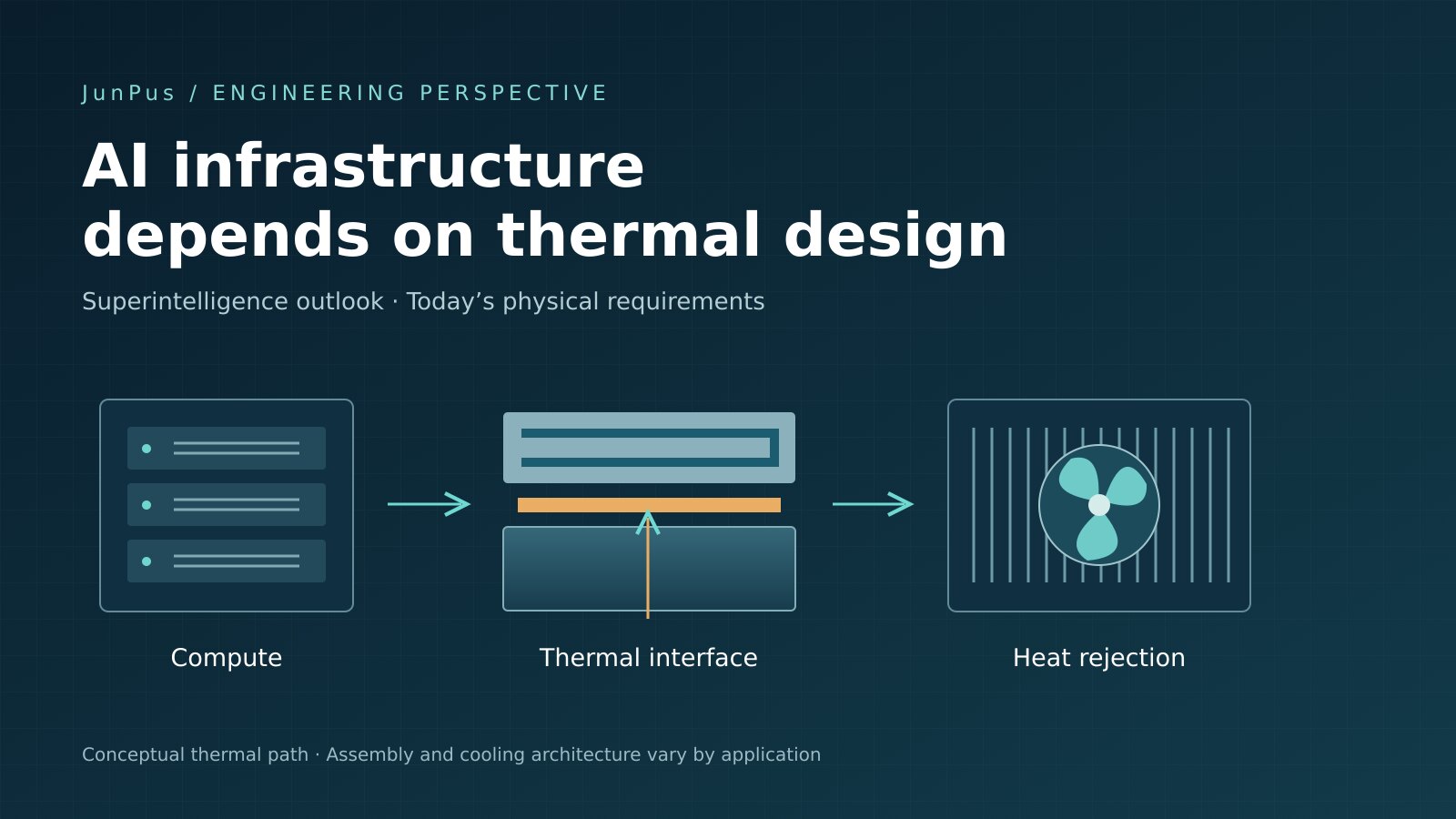
Superintelligence, sometimes abbreviated as SI, describes the prospect of AI systems with capabilities far beyond human intelligence. OpenAI’s discussion of superalignment uses the term for substantially more capable future systems. This article does not assume that superintelligence has been achieved. For hardware teams, the practical issue is already here: operating increasingly demanding AI compute within a dependable thermal envelope.
AI infrastructure has physical limits
Model capabilities attract attention, but deployed systems also depend on electricity, cooling and maintainable equipment. The US Department of Energy identifies reliable power and cooling as essential needs for data centers. The European Commission likewise highlights energy demand, water use and efficiency as challenges for the infrastructure supporting AI. These concerns apply to today’s facilities, regardless of the timing of future AI milestones.
Thermal planning therefore begins with an actual workload and a defined hardware configuration. A design review should establish processor power limits, ambient or coolant conditions, airflow or flow rate, and allowable component temperatures. These boundary conditions provide a useful basis for comparing cooling options and checking whether a proposed server can sustain its intended operation.
The thermal interface remains important
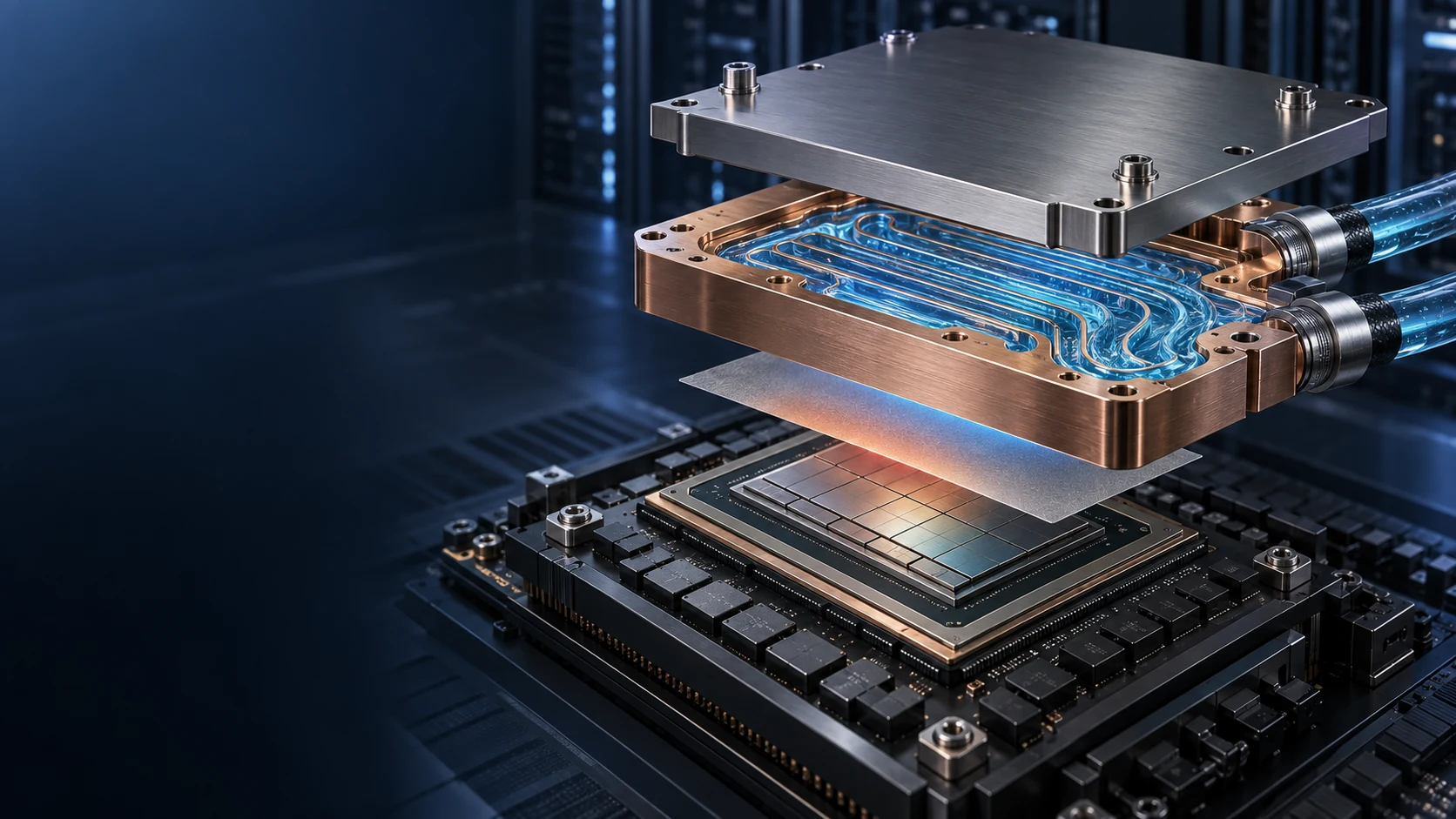
In an assembly that uses a thermal interface material between a processor package and a heatsink or cold plate, heat must cross that interface before reaching the cooling system. Material selection is only one part of the design. Bond-line thickness, contact pressure, surface condition and assembly consistency also affect the resulting thermal path.
A high thermal-conductivity figure alone cannot establish performance in a finished server. Engineers should compare interface resistance under relevant conditions and check how the joint behaves over time. Thermal cycling and material migration can change interface performance; the appropriate validation program depends on the material, package and intended operating life.
Qualify materials in the intended assembly
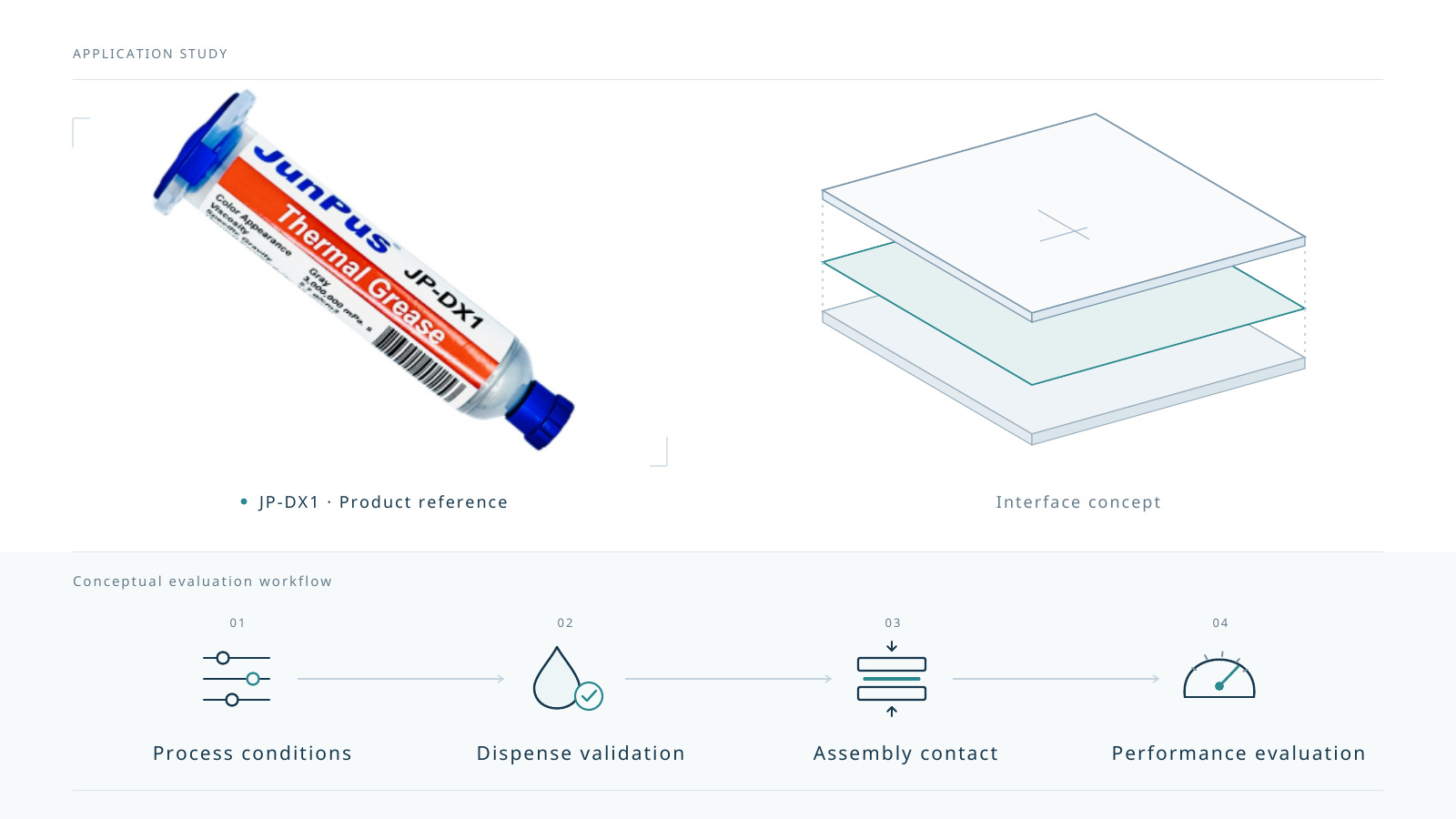
A useful qualification plan should record the baseline hardware, application process and measurement method before comparing candidates. Hold the workload and cooling conditions constant, and document temperatures, power, mounting conditions and measurement uncertainty. Repeat the assembly where practical to identify process variation rather than attributing every temperature difference to the material.
Reliability checks should reflect the expected service environment. Initial results should be considered alongside aging behavior, inspection findings and any change in thermal resistance. A material that performs well in one fixture still needs evaluation in the intended product. This is particularly important when a design changes package geometry, mounting pressure or cooling architecture.
Discuss application requirements with JunPus
JunPus lists JP-DX1 as a nanodiamond thermal compound formulated with silicone fluids. Customers considering it can review the JP-DX1 product information, then contact JunPus with their interface dimensions, target bond-line thickness, operating temperatures and validation requirements. Product suitability and any claimed system benefit should be established through application-specific testing.
As discussions of superintelligence continue, thermal engineering offers a concrete place to act: define the operating conditions, control the interface and validate the complete assembly. Those steps support sound decisions for the AI hardware being built today.